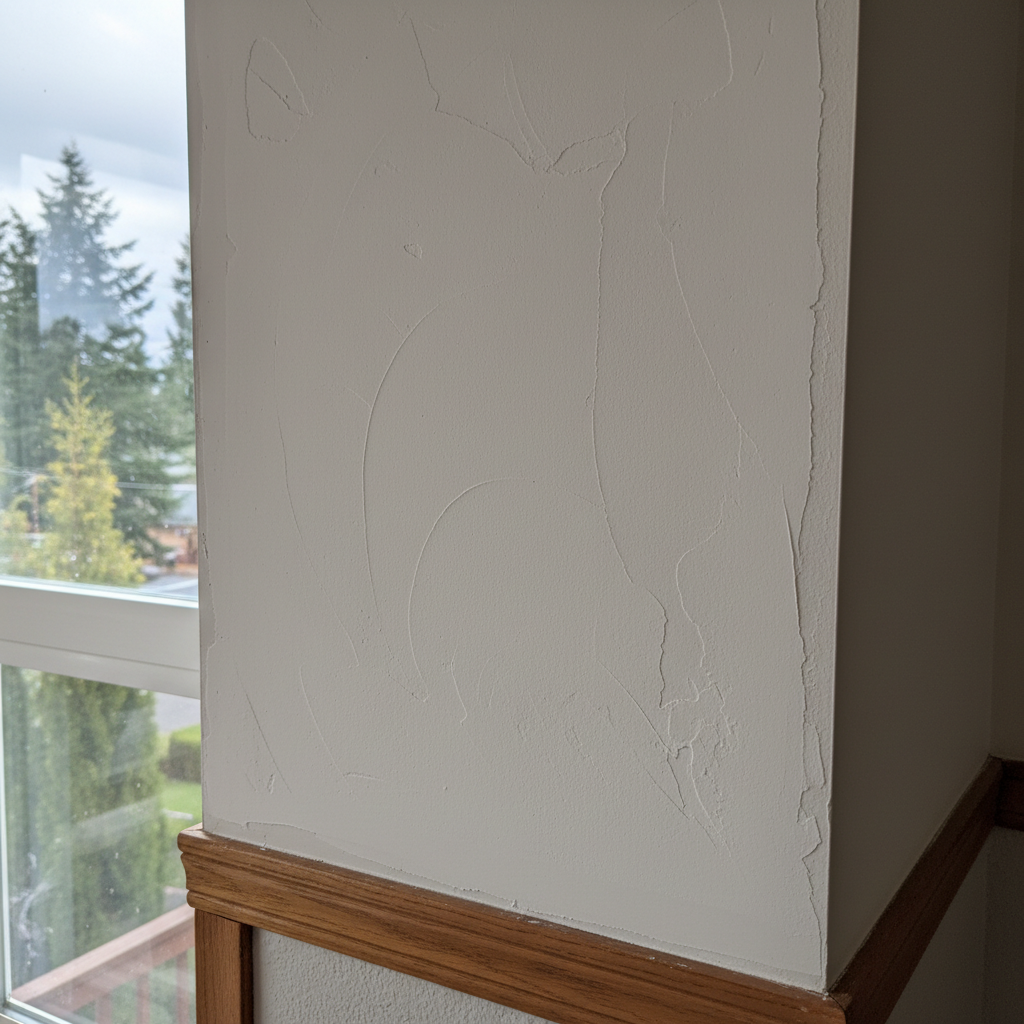
Got a hole in your drywall?
It happens. Maybe you moved furniture, or the kids got a little too enthusiastic with a toy, or a leaky pipe behind the wall left you with a mess. Whatever the cause, staring at a damaged wall can be frustrating. You're probably wondering, "Can I fix this myself, or am I going to make it worse?" Let's break down what you can realistically tackle and when it's time to pick up the phone.
Before You Start: Assess the Damage
First things first, take a good look at the problem. Not all drywall damage is created equal. A small nail hole is a world apart from a softball-sized crater or a water-damaged section. Here's what you need to consider:
- Size of the hole: Is it smaller than a dime? A few inches? Bigger than your hand?
- Type of damage: Is it just a ding, a crack, a clean hole, or is it crumbling and soft from water?
- Location: Is it on a flat wall, near a corner, or on the ceiling? Ceilings are always tougher.
- Texture: Does your wall have a smooth finish, or is it textured like orange peel or knockdown? Matching texture is where things get tricky.
For most Spokane homes, especially those older houses in the South Hill or Browne's Addition, you might find plaster walls or a mix of plaster and drywall. If you've got plaster, that's a different beast entirely, and you might want to consider a pro right away unless it's a tiny hairline crack.
What You Can Probably Fix Yourself (Realistically)
Okay, so you've got some common damage. Here's what I see homeowners successfully repair all the time:
- Small nail holes or screw pops: These are easy. A little spackle, a putty knife, sand it smooth, and paint. Done.
- Minor dings and dents: If it's just an indentation without a full tear, spackle or lightweight joint compound can usually fill it. Feather it out, sand, and paint.
- Small cracks (hairline or up to a few inches): If it's not a structural crack (meaning the wall isn't shifting), you can often widen it slightly with a utility knife, fill it with joint compound, tape it with fiberglass mesh tape (if it's a bit bigger), then mud, sand, and paint.
- Small holes (up to about 4 inches): For these, you can buy a self-adhesive mesh patch kit. You stick the patch over the hole, then apply a few thin coats of joint compound over it, feathering the edges. Sand and paint. These kits are pretty foolproof for minor repairs.
The key to all these DIY repairs is patience and thin coats. Don't glob on a ton of mud expecting it to dry perfectly. Multiple thin layers are always better.
When to Call a Pro (Like Us at Done Right Spokane Drywall)
Now, let's talk about when you should absolutely call in someone who does this for a living. Trust me, trying to tackle these yourself can lead to a lot of frustration, wasted materials, and a repair that looks worse than the original damage.
- Large holes (bigger than 6 inches): These require cutting out a section, fitting a new piece of drywall, taping, and multiple coats of mud. Getting the patch seamless and flat takes skill.
- Water damage: If you've got soft, crumbling, or discolored drywall from a leak, you need to address the leak first. Then, the damaged section needs to be cut out and replaced. Water damage often extends further than it looks, and you might have mold lurking behind there. This is definitely a job for a professional.
- Cracks that keep coming back: If you've patched a crack and it reappears, it could indicate a structural issue or movement in your house. A pro can assess if it's just a bad patch job or something more serious.
- Ceiling repairs: Working overhead is tough. Gravity is not your friend when you're trying to apply mud smoothly. Plus, ceiling textures can be notoriously hard to match.
- Extensive texture matching: If your walls have a specific texture (like skip trowel or heavy knockdown), getting a seamless match on a repair is an art form. A pro has the tools and experience to blend it in perfectly.
- You just don't want to deal with it: Hey, that's a perfectly valid reason! Your time is valuable. If the thought of sanding dust and multiple coats of mud makes you groan, just give us a call.
Even if you're handy, some jobs just demand a professional touch. We've seen plenty of well-intentioned DIY repairs that end up costing more to fix than if the homeowner had just called us in the first place. We're here to make your walls look like new, whether it's a small patch or a whole new section. Don't hesitate to reach out to Done Right Spokane Drywall if you're in over your head or just want it done right the first time.